%20(1).webp)
.webp)
.webp)


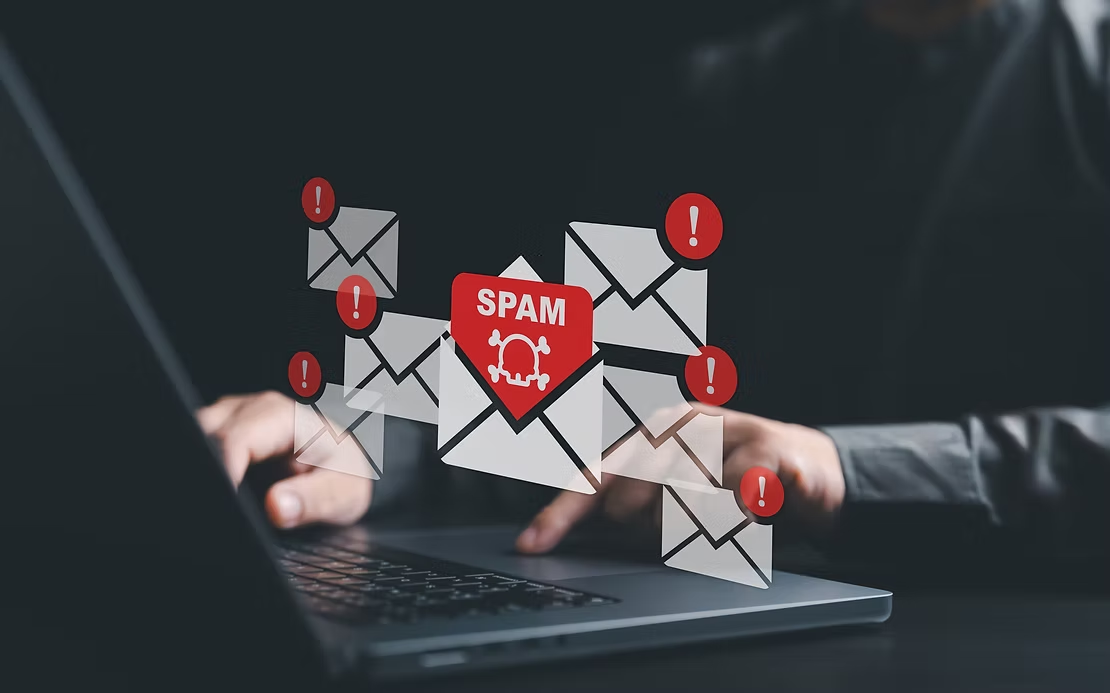
Online cybersecurity attempts are more sophisticated, making them harder to detect and counter. Scammers can build an entirely functional website to deceive victims into providing their personal information. Recognize these schemes to protect your business and implement strategies to prevent them.
About 30% of web users experienced phishing attacks in 2022, and there were over 1.35 million phishing sites worldwide. Scammers use various techniques to lure people into giving in to their demands. Here are the common tactics they use.
Attackers send emails that include links to fake websites, asking the victims to input personal credentials, like birth date, Social Security number, home address and other private details to steal others' identities.
Attackers rely on information they've collected before and exploit it to craft a lie and lure the victim into giving more. For instance, a scammer might introduce themselves as part of your finance team and ask you to provide them with your credit card details.
This strategy is similar to spear phishing but harder to detect because the email used is nearly identical to a legitimate one, with only one different letter or number.
A common example of this tactic is a pop-up alerting you of a virus on your computer. It usually includes a link to malware that will put your security protocols at risk if downloaded.
Scammers create a website that looks like a real e-commerce platform and ask victims to enter their credit card details if they want to purchase something.
Just as technology has advanced, cybersecurity threats have become more sophisticated. Recognizing phishing is critical as some signs are easily detectable while others require a highly discerning look. Watch out for these indications of fraud.
In 2023, the worldwide average cost of data breaches reached $4.45 million, 15% higher than the previous three years. This uptrend is alarming, prompting business owners to prioritize phishing awareness. Sidestep attacks with these techniques.
Regulate personal information available to the public. For example, display one business email on your website or socials where customers can direct all inquiries. Block websites that aren’t related to work.
Use an email filter, automatic spam folder and honey accounts to bypass risks. Disable compromised credentials immediately. AI can be a game-changer for cybersecurity defenses, allowing you to detect and neutralize data breach patterns before they cause harm.
Educate employees on how to spot and elude potential phishing. Remind them to double-check emails for suspicious links or attachments and flag them as spam if necessary. Report to IT any high-risk communications.
Require employees to change passwords every three months or instantly when a potential security breach occurs. Set up security questions or two-factor authentications.
Encrypt data and enable backup to minimize downtime if a breach occurs. Automate operating system and software updates to keep your virus, firewalls and network protection current.

These steps serve as your recovery and incident response plan after a breach.